
Solomeo is a medieval hamlet in Umbria, fifteen kilometres from Perugia, and since 1985 it has been the centre of Brunello Cucinelli's company and of his argument about what a company owes the place it occupies.
Cucinelli was born in 1953 in Castel Rigone, a village nearby, into a farming family whose house had no electricity and no running water. His father later left the land for factory work. Addressing the G20 in Rome in 2021, Cucinelli traced the whole project back to watching that work done without dignity, and to the dream of a company that could earn a profit while respecting the people who produced it.
He founded the company in 1978, with a small loan and a single speciality. Cashmere knitwear for women then came in the natural, undyed tones of the fibre. Cucinelli took sweaters to a dye works and asked for colour, orange included, and the coloured cashmere sweater became the product on which the house was built.
For the better part of two decades the company made knitwear and nothing else, first for women and then, from the 1990s, for men. By the end of the 1990s it was selling some 200,000 sweaters a year while operating a single small monobrand store. The complete wardrobe arrived around 2000, when American buyers asked not for another sweater but for a whole Cucinelli look, and the house expanded into tailoring, outerwear and the rest of the closet.

The offer today is a total look for men, women and children: tailoring and knitwear, accessories and lifestyle pieces, all of it conceived in Solomeo and made in Italy. The categories widened; the method did not. Each garment still begins as a question of material, and the house remains, before anything else, a cashmere specialist.
The move to Solomeo came in 1985. It was his wife Federica's home village, and it was emptying. Cucinelli bought the ruined fourteenth century castle at its centre and began a restoration that has continued, building by building, for forty years: the castle, the church, the lanes and houses of the hamlet, carried out with the company's money and on the company's time.
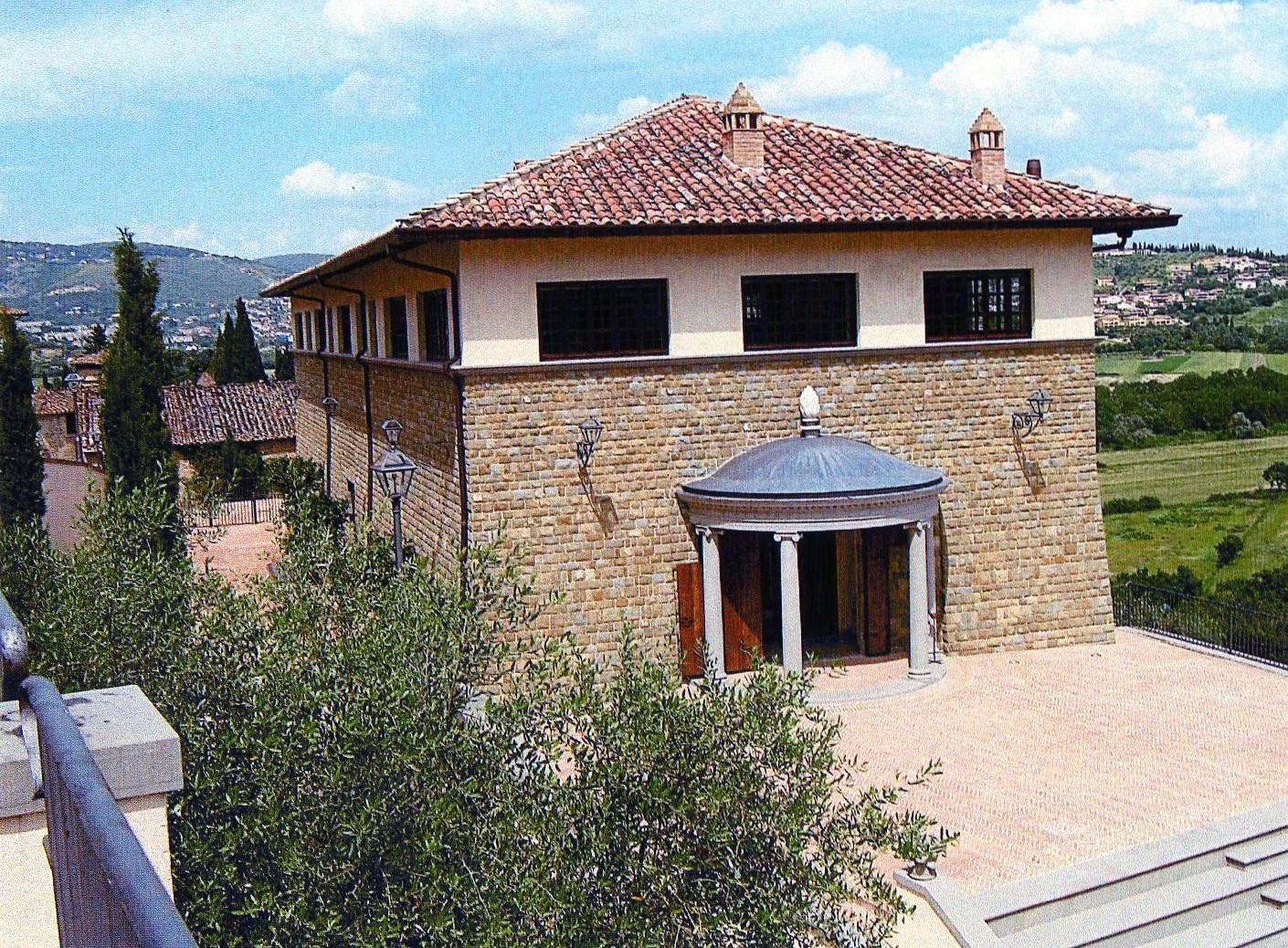
What grew inside the restored hamlet explains the founder's vocabulary. There is a theatre of 240 seats. There is a forum of the arts and a universal library. In 2013 the company established its school of contemporary craftsmanship and arts in Solomeo, teaching pattern making, cutting, tailoring, mending and linking, masonry and gardening, because the skills the business depends on were disappearing faster than the business was growing. The company itself has since moved down the hill to an industrial park at the hamlet's edge, where some 1,400 people work.
Beyond the walls, the restoration became landscape. From 2010 the company's Project for Beauty set out to protect the valley floor below the hamlet, laying out gardens, an amphitheatre and sports grounds where a conventional industrial estate might have gone, and raising a travertine monument inscribed as a tribute to the dignity of man. Beauty, in the founder's usage, is not decoration. It is infrastructure.
The phrase he gives all this is humanistic capitalism, and it has operational content. People at the company are paid on average about 20 percent more than they would earn in comparable work elsewhere. The working day is bounded by rule: a ninety minute lunch, an end to work in the early evening, and no email after half past five. A fifth of the company's profits go to the Brunello Cucinelli Foundation, which funds the cultural building programme.
Production has never left Italy. The house runs its own tailoring ateliers in Penne, Gubbio, Carrara and Poppi and a knitwear factory in Umbria, and works through a network of small artisan workshops, a structure it has declined to trade for scale. In April 2012 the company listed on the Milan stock exchange, the only initial public offering on that exchange in that year, at 7.75 euros a share. The family kept control through its holding company, and the listing changed the company's obligations without changing its address.
The building continues. In 2025 the company completed, six months ahead of schedule, a three year investment programme in its production base, with 146 million euros invested in that year alone: an expanded headquarters at Solomeo and new tailoring and outerwear facilities in Gubbio and Penne, intended to secure the making capacity of the next ten to fifteen years.
The numbers have since grown into the argument. Revenues passed one billion euros for the first time in 2023 and reached 1,408 million euros in 2025, up 11.5 percent at constant exchange rates, with a net profit of 142 million euros. At the end of 2025 the house operated 136 directly managed boutiques. Its founder, who remains executive chairman and creative director, described the year as a record in both revenues and brand image. The hamlet and the income statement are, in this house, the same document kept in two forms.
