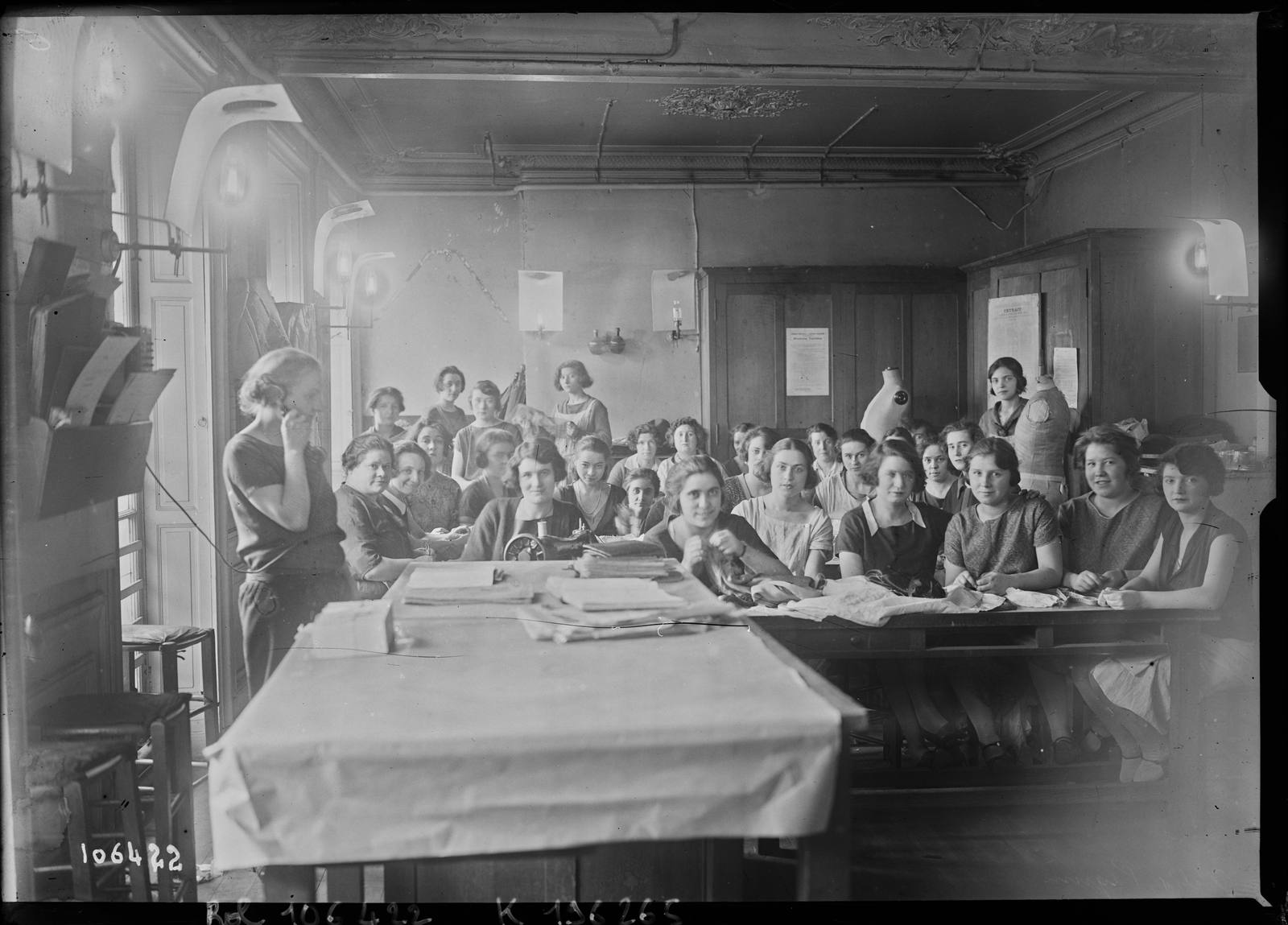
The cabine model is a profession, not a placeholder. She stands while the atelier pins, drapes, and re-cuts around her, holding still for hours while a sleeve is re-set or a hem is re-leveled. The work requires a particular body, a particular patience, and a particular discretion: what is seen in the fitting room in January does not leave the fitting room before March. The house trusts the cabine the way a surgeon trusts the table.
The tradition has a lineage. In the 1980s, Ines de la Fressange was Karl Lagerfeld's muse at Chanel, the living embodiment of the house's line through a decade that defined modern Paris fashion. The house-muse relationship is the cabine tradition at its most visible: one body, one designer, a collection built fitting by fitting on the same shoulders, season after season. The muse is not a mannequin. She is a collaborator with pins in her.

The mechanics are exacting. A toile, the muslin prototype, is fitted first, then the real fabric, then the finished garment, each stage requiring the same body in the same posture. Measurements are taken to the millimeter and recorded in the atelier's books. A collection is not designed and then fitted; it is designed through fitting, and the cabine model is the instrument the design is played on.
There is a hierarchy to it. The house cabine, the season's chosen cohort, carries a prestige that a single booking cannot match: it means the atelier knows your body the way a tailor knows a client. New faces rotate through; the trusted ones return. For a young model, a season in a great house's cabine is an education no school offers, in how clothes are actually made.

The fitting model's day is measured in stillness. Hours on the stand while the premiere adjusts a shoulder, steps back, adjusts again. The body must hold the same posture through every iteration, because the garment is being built against it and any shift corrupts the measurement. It is athletic in its own way: the endurance of absolute stillness, repeated daily, for weeks.
Discretion is the cabine's other professional requirement, and it is absolute. The collection does not exist yet in any public sense, and the fitting model sees it before anyone outside the atelier. What is pinned in January cannot be described before the show. The houses choose their cabine accordingly: trusted bodies, trusted temperaments, professionals who understand that silence is part of the job.
The public never sees the cabine, and that is the point. By the time the show's cast is announced and the photographers take their positions, the collection has already lived on living bodies for weeks. The runway is the final fitting, performed in public. Everything the audience admires about how a garment moves was decided in a quiet room, on a standing model, with pins.