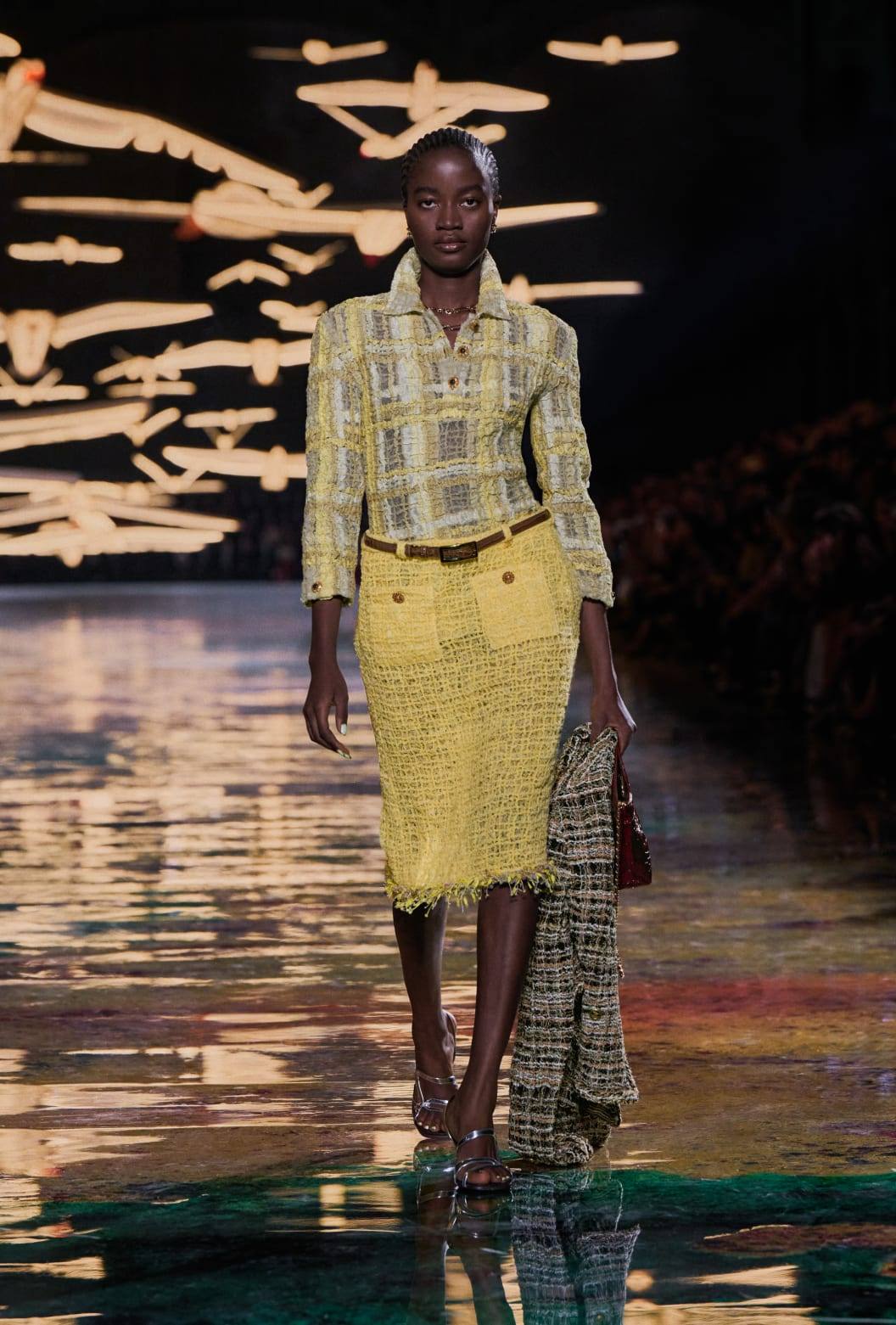
The casting call came from a phone screen. Rachel Ojuromi, a 22-year-old model and creator from Lagos, walked her first official runway on October 5, when she stepped out at the Grand Palais for Chanel's Spring/Summer 2027 show. Three months earlier she had been recreating the house's clothes on the streets of Lagos with thrifted pieces. The distance between those two facts is the story of this season's most instructive casting.
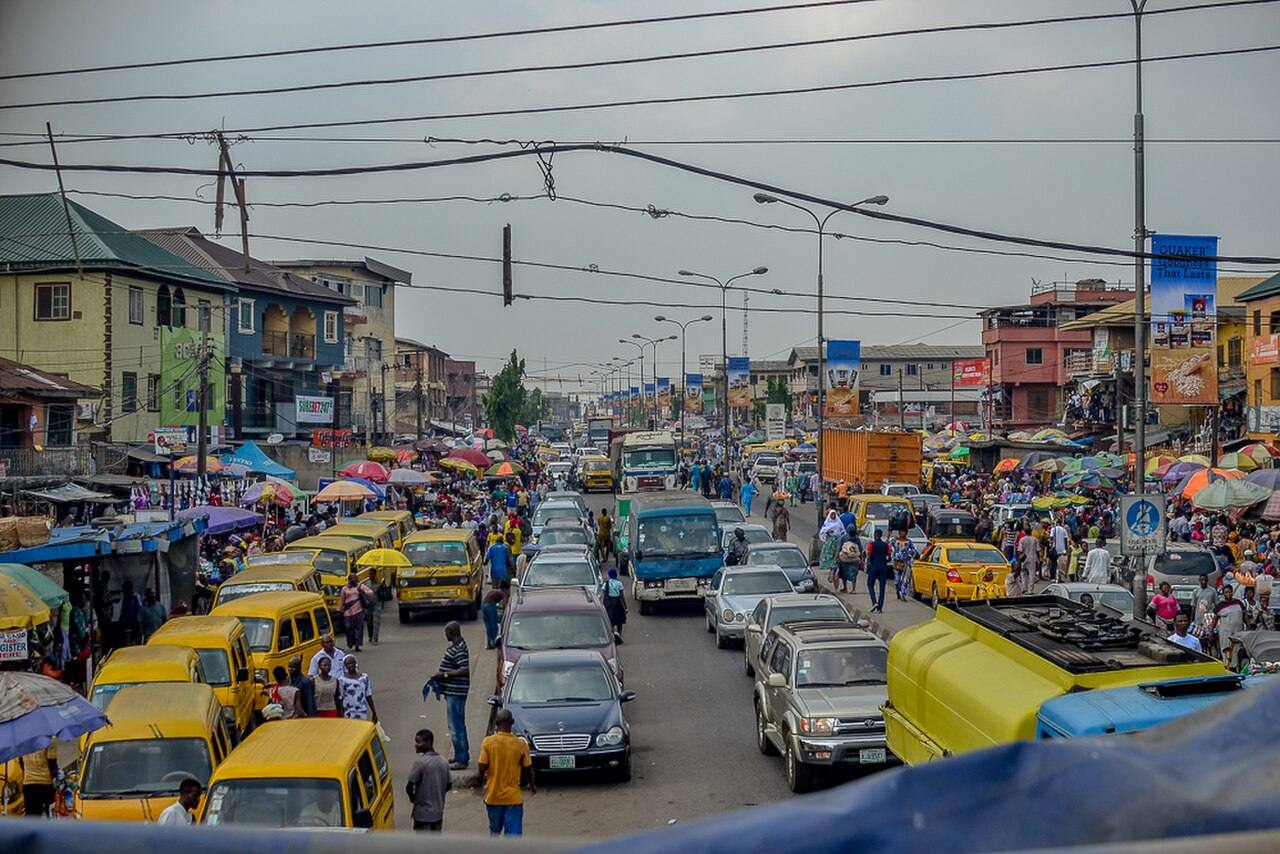
Ojuromi and her collaborator, stylist Debby Fasingha, began making fashion videos in March 2026, shooting in Lagos markets and streets, at Yaba, on the Red Line rail overpass. In July she posted a recreation of Chanel's 2026 Métiers d'Art collection, the show Matthieu Blazy had staged the previous December in a disused Bowery subway station in New York, with models emerging from an MTA train. That collection, Blazy's debut Métiers d'Art for the house, drew on Gabrielle Chanel's 1931 trip to the United States. The Lagos video drew a reported two million views. Blazy himself commented on the post: "Everything."

What followed was not the overnight part. "It's a series of compounding events. It's never overnight. It's all your life; you work towards something," Ojuromi told Vogue. "That video was a vehicle that led us to where we are now." After a week in Paris, the confirmation came: she would walk the show. No outlet has named who made the call; one report says her team delivered the news while she was at home. On her second night in Paris, she made a 3 a.m. trip to the Eiffel Tower with friends. Before Paris, she had been told by a scout that she would never do runway, fashiontimes reported. The runway disagreed.
The show she walked was Blazy's third ready-to-wear collection for Chanel, an 83-look procession titled La Conversation, Part Three: Different Faces of the Same Coin. Beneath the Grand Palais dome, hung with a giant moon and luminescent seagulls over a reflective resin floor, models emerged in jersey lingerie with exposed boning, the post-war suit, the house's ballerina petticoat in sugared-almond blue, and a trompe-l'oeil tweed cut from fine silk. Blazy unveiled what he called a technical innovation: smocked tweed, a stretch fabric he maintains was previously impossible. The collection's stated theme was flight: illuminated origami cranes, nests, and feathers tracing the many lives of Gabrielle Chanel. "Like a bird, she took flight, and each step she took led her towards freedom," Blazy said in his statement of intent. The front row held Dua Lipa, Nicole Kidman, and Pedro Pascal; Blazy took his bow to the heavy synths of Britney Spears' "Gimme More."
Ojuromi's look was number 73: a yellow-and-grey tweed shirt with a matching midi skirt. She wore her braids. "When I saw my look, I was like, 'It's a sign. This is a sign,'" she told Vogue. "They wanted me to look exactly like me and I really appreciate that." Backstage, she was steadied by fellow models Bhavitha Mandava and Anok Yai. On the runway, the nerves gave way to something else: "I was having fun. I was like, 'Yeah, I deserve to be here, of course!'"
There is a temptation to file this under virality, and it would be wrong. The video was the introduction, not the audition. What Chanel bought was a point of view: Ojuromi's Lagos recreations were styling, location scouting, and casting direction in one, made with thrifted clothes and a collaborator. Views alone do not fill a show package; a show package is a document of judgment. The judgment here was that a creator who could build Chanel out of a Lagos market could carry the real thing down a Paris runway. The runway agreed.
The machinery had moved before Paris. At the end of September, Ojuromi announced on Instagram that she had signed with No Smoking in New York, Safe Management in Paris, SUPA Worldwide in London, and Next in Canada. The Chanel show was the debut those signings were building toward. Her handle, @giverachelashot, reads now like a mission statement that worked. The industry keeps asking where the next faces will come from. For one October week, the answer was a phone, a market in Lagos, and a designer who commented "Everything" and meant it.
